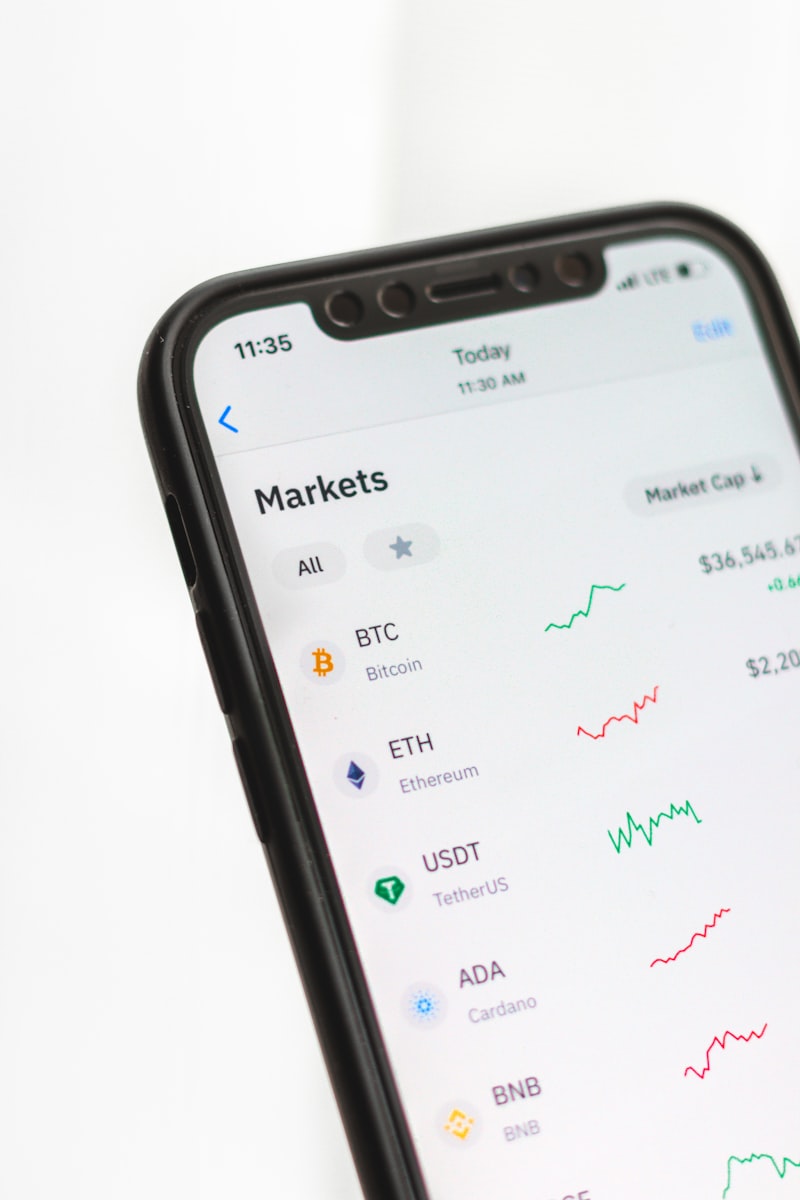
Crypto trades around the clock, across dozens of exchanges, in a market that can move twenty percent while you sleep. That is thrilling until you try to remember why you entered a position at three in the morning three weeks ago. Memory fails long before the market does. A crypto trading journal Notion template gives every trade, every emotion, and every mistake a permanent home, so the market's chaos becomes data you can actually study.
This guide covers what a crypto journal needs to capture, how to structure it for a market that never sleeps, and the metrics that reveal whether you have a real edge or just a lucky streak. Nothing here replaces your own discipline. It gives that discipline a place to live.
Why Crypto Needs Its Own Journal
A stock trader works inside a defined session with circuit breakers, settled hours, and a closing bell. Crypto throws most of that out. Markets run 24/7, exchanges dominate the order flow, and a single piece of news can liquidate leveraged positions across the board in minutes. A journal built for equities does not fit that world.
Crypto compounds the usual trading problems with its own set. Volatility is higher, so wins and losses arrive faster and larger. Weekend liquidity dries up, so the same setup behaves differently on a Saturday night. Funding rates quietly drain leveraged accounts even when price stands still. Each of these is a variable worth tracking, and none of them exist in a traditional trade log.
If you are new to the asset class, our guide on crypto trading for beginners covers the fundamentals. Once you are placing live trades, the journal becomes the tool that keeps those lessons honest.
📊 "In crypto you cannot rely on memory. The market moves too fast for it and the stakes move faster."
What a Crypto Trading Journal Notion Template Captures
The purpose of the journal is simple. It stores the hard numbers of a trade next to the soft reasoning behind it, so weeks later you can reconstruct both. A record that holds only profit and loss tells you what happened. A record that also holds your thesis tells you why, and the why is where improvement lives.
Notion is a strong fit because it treats every entry as a structured page. You can filter, sort, and group without rebuilding anything, and you can see your trades as a table, a board, or a calendar depending on the question you are asking. That flexibility matters in a market where the right question changes by the week.
A complete crypto journal generally captures six things: the trade mechanics, the setup, the market context, the risk you accepted, your execution quality, and your emotional state. When all six sit in the same record, patterns that were invisible suddenly line up.
Tracking a Market That Never Closes
The hardest part of journaling crypto is timing. There is no closing bell to anchor a review. A London trader, an Asian trader, and a night owl can all sit in the same market during completely different hours, and the character of the market changes with each window.
The fix is to log by session, not by day. Tag each trade with the liquidity window it lived in: the Asian session, the London open, the New York overlap, or the quiet weekend. Over time you will see where your best trades cluster and where your worst ones hide. Many traders discover their edge lives in one narrow window and their losses concentrate everywhere else.
Keep the logging itself light. During a live session, capture only the essentials in a few taps. Save the reflection for a short review once the position is closed. If logging interrupts the trade, you will stop doing it, and a journal you abandon records nothing at all.
Fields Unique to Crypto Trades
Beyond the basics that every trade log needs, crypto adds its own set of fields. These are the ones that separate a useful crypto journal from a generic spreadsheet.
- Exchange and pair. Which venue and which market, such as BTC/USDT or ETH/BTC. Spread and fees differ wildly from one exchange to the next.
- Spot or derivative. Whether you traded spot, a perpetual future, or an options contract, since each has a different risk profile.
- Leverage. The multiplier you used, which decides how fast a small move becomes a large one.
- Funding rate. The cost or credit attached to holding a leveraged position, which many traders forget until it eats their profit.
- Fees paid. Every maker and taker fee, tracked so your real return reflects what the exchange actually took.
- Thesis and catalyst. One line on why you entered, plus the news event or technical level that triggered it.
- Market regime. Bull, bear, or range. A breakout strategy that prints in a trend can bleed in chop.
Stack those fields into a single trade page and you can answer questions a spreadsheet cannot. Which exchange gives you the cleanest fills? Does leverage improve your returns or just your stress? Does your win rate survive a change in market regime? The journal holds the answer, but only if you recorded the input.
Metrics That Expose Your Crypto Edge
Individual trades are raw material. The value appears when you aggregate them, and a handful of metrics do most of the work in crypto.
- Expectancy by pair. Your average profit per trade for each market, which shows where your edge actually is.
- Win rate by session. Whether you make money in the Asian session or only during the New York overlap.
- Performance by regime. How your strategy holds up in trending and ranging conditions.
- Total fees and funding. The silent tax on active crypto trading, made visible so it stops being invisible.
- Cost of broken rules. Comparing profit from disciplined trades against the rest shows the price of indiscipline in plain numbers.
Reading these metrics changes behavior. Our guide to risk management in trading explains how to turn that awareness into position sizing that protects your account when the market turns violent, which in crypto is not a question of if but when.
Mistakes That Break a Crypto Journal
Most crypto journals fail for the same predictable reasons. Avoid these and you stay well ahead of the traders who quit.
- Logging only the wins. The losing trades carry the lessons. Record them all, especially the ugly ones.
- Writing it from memory days later. Crypto detail fades fast. Log the same session or lose the truth.
- Ignoring fees and funding. A strategy that looks profitable before costs can lose money after them.
- Trading with no thesis on record. If you cannot write one line on why you entered, you were reacting, not trading.
- Tracking results but not execution. A winning trade taken off plan is a warning, not a victory.
- Never reviewing the data. Entries you never filter are a diary. The review is where change happens.
Turn Chaos Into a System
A crypto trading journal Notion template replaces a blur of round the clock decisions with a record you can study. You stop guessing why an equity curve stalled and start reading the answer in your own history. You stop trusting memory and start trusting data, which in a market this fast is the only reliable guide you have.
The Notion Trading Journal gives you that system in a single duplicate link. If you want to see how it compares to tracking crypto in isolation, our crypto trading journal guide walks through the same principles in depth.
- Trade log built for spot, futures, and leveraged positions
- Automated profit and loss and R multiple calculations
- Session, exchange, pair, and market regime tags
- Fee and funding fields so your real return stays honest
- Playbook tags and execution scores on every trade
- Performance dashboard with win rate, expectancy, and profit factor
- Daily and weekly review pages that turn logs into decisions
- Works on desktop, tablet, and phone so you can log from anywhere
- One-time payment of $10 with no monthly subscription
Stop letting an always-on market erase its own lessons. Put every trade in a template you can review, and let your own record become the edge you have been looking for.
Get the Notion Trading Journal Template
Everything covered in this guide, already built and connected. Track your crypto trades from day one.
Buy Now - $10 One-Time